10 Nov 2020
Let me start by stating that I am a white cis heterosexual woman. Since birth, I have benefited from the way the world works here in Australia (and most, if not all, other first world countries)
Was I aware of this as a child? No.
Am I aware of this as an adult? Yes.
Was I always? No.
Am I always conscious of it, now that I am aware of it? No.
Like a lot of people, I was gripped by the recent US election, hopeful that a change of president would happen but also trying not to be too hopeful since it had once seemed ridiculous to me that Trump would be elected even once.
And I was not blind to the fact that the people perpetuating the cries of “stop the vote” were overwhelmingly the same colour as the people recently calling out “all lives matter” – that is to say, white.
And I was not blind to the fact that the people dancing in the street when the election was finally called were overwhelmingly, not white.
And I have not been blind to the disproportionate number of people dying in custody both in America and here in Australia that are not white.
And I have not been blind to the xenophobic policies of my own country when dealing with asylum seekers and refugees and visa overstayers. The ones that are demonised, deemed illegal and persecuted are overwhelmingly, not white.
And I have not been blind to the discriminatory nature of our media that names and shames young black girls that flouted Covid restrictions, but did not do the same for the rich, white people who flouted Covid restrictions.
I try to be a good ally. I do. I do not always get it right. Like all humans I’m a work in progress.
But what I was blind to is how many of my friends identify as people of colour.
Not wilfully. I’m not saying anything daft like “I don’t see colour”, of course I do.
I love the diversity of my friendship circles. I love how their own life experiences, cultural identities, the different countries in which they were raised, their education, their families and their friends, all combine to make them the unique individuals that they are.
But I make friends with people with whom I share values and interests. I make friends with people who I connect with. I do not make friends with people based on the colour of their skin.
How f*cking privileged is that that I can just be friends with people because I like them and assume that they are going about in the world with the same nonchalance as I do?
The colour of my skin has never caused me any grief apart from its capacity to burn when the sun even glances at me. It has never closed any doors. My name has never been sighted on a resume and discarded. I have never needed to learn another language to get by in the world because the world by and large speaks my native tongue.
Colour is irrelevant to me because it doesn’t need to be relevant. And while I try very hard to be cognisant of my privilege, I clearly have work to do.
How do I know this?
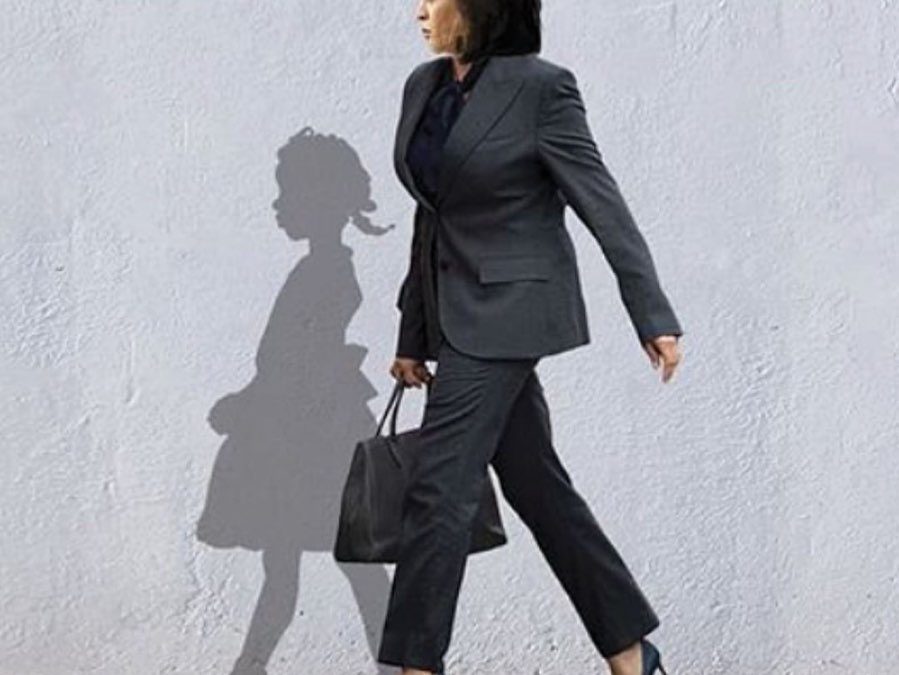
Because while I wanted Biden and Harris to win, while I loved the idea of a female VP, especially a black, Asian-American, female VP, it was because of what I see her standing for and the impact she’ll have on America moving forward.
What I had failed to see is how many of my friends, the friends that I have that inhabit the same first world countries that I do, had never had somebody that looked like them represented in the leadership of their country.
White women are all over the place when it comes to the leadership of countries. From Thatcher in the UK and Merkel in Germany, through to Arden in NZ and Gillard here in Australia, white women in leadership positions are effectively old news. That is not to say that there is not much more to be done but me, me and my white skinned daughters, can see what we can be.
And then Kamala Harris become VP elect of the USA.
And all of a sudden, I could see what I had missed.
And that was how many of my friends are women of colour.
I repeat what I said before, it is not that I don’t see colour, but I can honestly say that despite being surrounded by so many amazing women whom I love, admire, learn from, laugh with, spend time with, I have had no need to identify them by the colour of their skin.
How f*cking privileged am I?
It astounds me that I was so blind to how important, and how powerful, seeing yourself represented in the leadership of your own country is.
It astounds me that I was surprised by the flood of updates by friends across all my social platforms talking about the profound impact and emotion they felt on seeing themselves reflected in that election result.
And that surprise humbles me. Because if I identify as an ally, I have a lot of work to do.
Congratulations to Kamala Harris (and Joe of course)
And congratulations to all of you that see yourself reflected in the results.
I will do better, and encourage those around me to do better, to make sure a result like this becomes the norm and not the exception.
(Image source: Bria Goeller)
26 Oct 2020
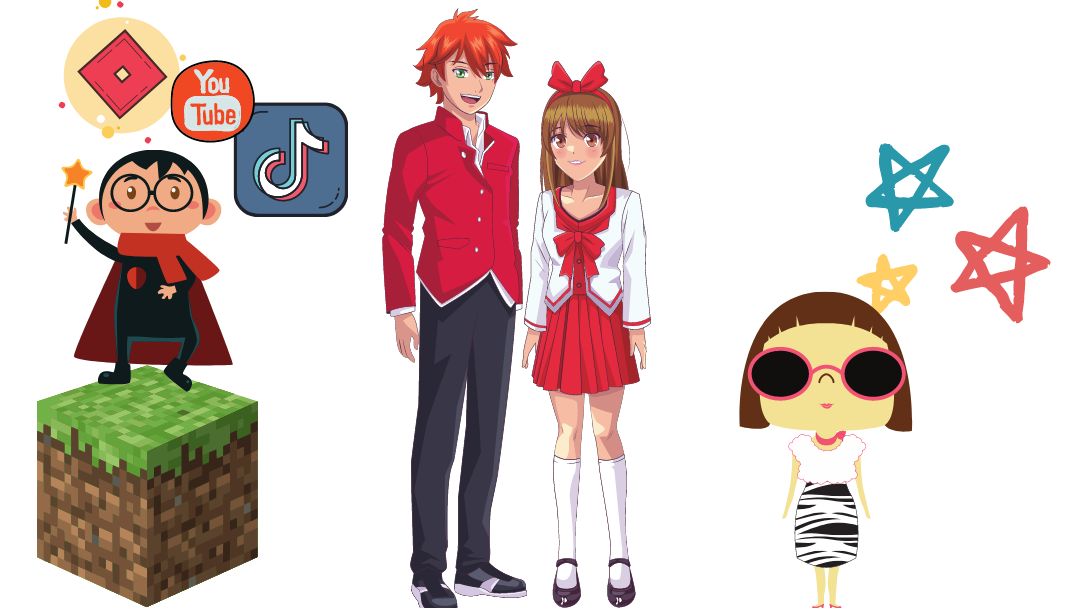
Conversations with the two humans in our house aged eight and ten generally go something like this at the moment. “Harry Potter, Roblox, Minecraft, Anime, Manga, My Hero Academia, YouTube, TikTok, Fashion, Harry Potter, Roblox, Minecraft, Anime, Manga, My Hero Academia, YouTube, TikTok, Fashion, Harry Potter, Roblox, Minecraft, Anime, Manga, My Hero Academia, YouTube, TikTok, Fashion, I’m hungry what’s for dinner?”
And to be honest, while the last one drives me nuts, at least I have some hope of adding meaningfully to the conversation.
Apart from limiting screen time and making sure appropriate safety measures are in place so – a) they don’t become at one with the couch and their pyjamas and, b) because we’re the parents and that’s our job – we’re okay with their current obsessions. Despite all things online being cast as the villains in child development and growth in most narratives, I don’t happen to concur with that point of view.
Anything that gets the girls exploring different perspectives and interacting with their peers is a positive. Games they play on Minecraft and Roblox have had them exploring budgeting, building design and community as they work out what they can afford, who needs to use the space and what infrastructure do they need to support the communities they are building.
An interest in My Hero Academia, Anime and Manga has them exploring different storytelling styles and learning new illustration techniques which they incorporate into their offline art. Big discussions happen around which of their own ‘quirks’ can be considered in a super power.
The recent discovery of Harry Potter means all the books have been read, all the movies watched, and a thousand YouTube and TikTok videos consumed. We’ve all had to do quizzes to find our HP houses, they have favourite characters and we’ve had a very robust discussion about transphobia and whether or not you can love a book and dislike what an author stands for. And those conversations were started by the small people in our house. (Not the big ones, we’re still bickering over who is the most tired and who does the most housework.)
TikTok means they have filled my phone with videos of them doing strange dances and various magic acts, but they’ve enjoyed learning the tricks to creating short films and once, as a result of them having fallen down a rabbit hole of American TikTok vidoeos, I found myself and the ten year old having conversations about how Trump talks about Covid and whether or not it’s responsible. (Her view: No. My view: Also no but with more profanity)
I personally think there is a big difference between innocence and ignorance. There are ways to talk about big topics in ways that are age appropriate and I dislike how societally we shy away from conversations with our children about things that happen in the world that are hard and hurtful. Children are never going to be empathetic towards others if they don’t know that diversity exists – not just in race, religion, gender, sexuality, ability – but also diversity of experience.
Online games or social platforms aren’t evil or wrong. Some just allow the arseholes of the world to amplify their voices. But equally, those very same platforms also allow the voices of people that are good and kind and reasonable to be amplified. But only if we’re there, on the same platforms that our children are utilising, showing them how to be good digital citizens by modelling that behaviour ourselves. Apathy is not an option when you parent.
Fear and bigotry flourish where people don’t understand each other. Our children are not growing up in some universe far, far away – we have access to the same games and platforms and we have to be as open to learning as we want our children to be.
So no, I’m not going to ban my children from social media and online gaming. I’m not buying into increasingly hysterical conversations about how everything online is the worst. I’m going to make sure they have the personal skills to recognise what they see online in context, put boundaries in place to look after them as they learn and let them embrace the world they live in which is increasingly digital.
And for sure, I’m going to get it wrong sometimes. That’s true of all the parenting we do from the cradle to the grave.
But I’ve also got to trust in the people that my children are becoming. Because if I don’t trust that, we’ve got way bigger problems than some chick on TikTok showing my kid weird dance moves
30 Sep 2020
Change. Supposedly as good as a holiday and takes just as much planning am I right?
I’ve been working on this for quite some time, since before my stroke actually. That slowed things down. Then a global pandemic changed how businesses were working. And it took a long time to work through. See, ‘rebranding’ as myself took a whole lot of courage and sitting outside my own comfort zone to get comfortable with putting myself front and centre.
I am still heading in the same direction so there is no pivoting. I am not doing something millions haven’t done before, so it’s not unprecedented. It just required a change of how I did things and how I presented to the world.
I first started considering it when I was doing a business coaching session with Nick Bowditch at the beginning of 2019. Nick’s not the kind of guy to have sessions with if you want somebody to be gentle with you (in the best kind of way). He asks the hard questions and he doesn’t let you not answer. The question he posed is “Al, if it’s you that does all the work, if it’s you that people are writing great things about, if it’s you that people are quoting in their books and hiring to work for them – why do you have these other brands? Why can’t you just say – I’m Alison Hallworth and I do it?”
Well I don’t mind admitting that I umm-ed and aah-ed and stuttered through a number of replies to which he replied
“Bullshit – you’re just scared.”
He was right. I was. I know I’m good at a lot of things but I always feel very arrogant owning them. And so, like most things, I use humour to deflect and skirt around the issue. It’s something I’m excellent at by the way. Anyway, by the end of our session, I had promised to buy the domain and think about it. And I did. I bought the domain immediately and told him so I’d get the gold star. I like gold stars. It makes me feel like I’m achieving things.
Then I had the brain bleed and a lot of things went on hold. But earlier this year I spoke to my little coven of accountability thugs and committed to this ‘rebranding’ by the end of September and like good accountability thugs they held me to it and I actually did it.
My ‘Positively Social’ URL sends you to alisonhallworth.com.au now and the ‘Talking Frankly’ blogs and podcasts are now part of that same site. The one with my face on it, my skill set, my recommendations. My little corner of the internet is now all in my name. I’m not getting rid of Talking Frankly – it sums up that little piece of the pie nicely and I have had so many opportunities, made so many great friends and learned so much as a result of that ‘thing I do on the side’ that I could never abandon it.
But ‘positively social’ I came to realise was an ethos that lives inside me. It’s not just about social media, but it’s about being positive in all social settings. It’s about being kind, having an impact and being proactive about bringing about change. It’s not about perfection, it’s not about playing the game or having the right title. Those things are great – but they are not the things that motivate me. Connection is what motivates me. Connecting people with ideas. Connecting people with people. Connecting businesses. Connects words and great content with audiences. And yes I use online social to do that and I teach people how to do that online social thing well – but I also do it offline because it’s just part of me.
Just being myself also gives me the opportunity to work on things that I enjoy as well as do the things I’m best at. Maybe I’ll write the book I think about, maybe my little podcast will grow to be a great big one. Who knows. In the meantime, I can keep doing the things that I’m good at, working on projects that have a positive impact on the world around me, just as me.
It seems fitting on the day that Helen Reddy passed to yell loudly ‘I am woman, hear me roar’!
So.
Big deep breath.
“Hi, I am Alison Hallworth and I provide connection through great strategies, training, coaching, writing and podcasts.”
Spread the word.
22 Feb 2018
Maggie Dent the author shared an article last month by a Dr Meeker titled “Social Media and Teens: Time to Dial it Down.”
Now I need to state up front that unlike Dr Meeker I am not a paediatrician and unlike Maggie Dent I’m not an authority on children. Also unlike Dr Meeker and Ms Dent I have access to stock photos that don’t only feature white families, but I suspect that’s a side issue altogether.
The article made me cross. Not because I don’t acknowledge that there is a definite role that media – both old and new – plays in the development of self-esteem, the presence of anxiety and so on in teenagers. I might not be an expert, but I’m not an idiot.
I was a teenager. A lot more recently than Dr Meeker and Ms Dent I might add. It totally sucks to be a teenager sometimes. But it sucked to be a teenager in the 1980s just as much as it does now. Bullying isn’t new – it’s just developed to take advantage of the tools available. Low self-esteem isn’t new – it’s just that media that delivers it has changed. Friendship isn’t new – it’s just the way that we communicate with our friends has evolved. Parenting isn’t new – and neither has the immense resistance to the next generation doing things differently.
There is more than a little irony that of the hundreds of comments on Maggie’s post, and probably thousands more as the result of the 622 shares at the time I wrote this, the vast majority were the VERY outraged condemning social media as a communication tool. On social media.
Our children are existing in a unique time. They are growing up with technology so sophisticated we wouldn’t have believed it possible when we were kids. They are going into jobs that didn’t exist when we left school. The way they communicate is so much more nuanced than the way we did. They understand that there are many ways of getting a point across and not all of them involve the spoken word.
They are living in a world that allows them access to thoughts, ideas and concepts beyond the ones espoused in their homes, their schools or their local community. Which is, if you really think about it, such a wonderful thing.
Social media has been one of the most impactful change tools employed over the last ten years. It has amplified the voices of women. It has amplified the voices of our gay and queer communities. It has amplified the voices of people of colour. It has given a voice to those we imprison in refugee ‘camps’. It has allowed us access to different world views. It has helped people that feel ‘other’ in any way to find their own ‘tribe’.
Sure, it has also amplified the voices of the hateful and hurtful. But those voices are only loudest because we give them so much weight in the media. For every #gobacktowhereyoucamefrom there is more than one version of #Iwillridewithyou. For every #no filter, there is more than one version of #Iammorethan.
It is not social media that is at fault. It is us. The adults. The ones that aren’t keeping up with the program. The ones that dismiss progress as ‘kids stuff’, ‘irrelevant’, ‘dangerous’. The ones that think the world is getting less safe, not more safe. The ones that share fake news. The ones that don’t connect with their children in the ways that make sense to them, but demand they return to the safe old world where we taught respect for our elders by beating our children, drove without seatbelts and painted our houses with lead paint.
It is us. The adults. The ones that heap vitriol and abuse upon people like Mariam Veisdevah, Yasmin Abdel-Magied, Clementine Ford, Tracey Spicer, Benjamin Law or Julian Burnside. It is us, the ones that pose with our kids in our profile pictures as we type ‘I hope your raped you dumb fat c&&t’ under something we disagree with. It is us, the adults, that attack the person rather than the point under articles in the newspaper. It is us, the adults, that post pictures pretending to shoot our political opponents just after a school shooting.
There is NO online vs offline. That LINE exists only in your mind. The world is a seamless blend of tools that today’s children use to communicate, to learn and to be part of the world around them. And adults use them too, though some days it feels like they use them to despair of our children’s use of the same tools.
While their use of technology might be something that seems almost miraculous to those of that remember a world where our phones were attached to a wall, the way our children socialise, the way they interact with other people, the way they practice empathy, compassion and kindness, well… they are still learning that from us.
31 Jan 2018
The dictionary definition of social and/or sociable is “willing to talk and engage in activities with other people.”
So basically, positively social is about utilising your platforms, BOTH traditional and digital, to have a conversation. It is about owning your space, being transparent, being open to feedback. It’s not just about having a Facebook page or a social media manager.
It’s about creating a culture and a structure that is genuinely representative of your brand. It’s about preparation, it’s about designing risk management processes, it’s about empowering staff, it’s about aligning your messaging.
It’s understanding we operate in the H2H space now. Businesses don’t make decision. Consumers don’t make decisions. Humans do. People. Every touch point you have with people is more than a marketing opportunity, or advertising, or sales, or recruitment. It’s about creating connections that endure.
It’s knowing how to tell your story. Depending on your brand, your story might feel more like a choose your own adventure as you put it together. While you get to create the central narrative, how people engage with your stories and the decisions they make as a result of the information you give them, that determines whether or not they are happy with the end outcome.
Positively social is about engaging with dissenters so that you can learn from them. It’s about celebrating your brand champions both internally and externally. It’s a business mindset. It’s proactive. It’s not all about you.
The difference between success and failure is always going to be around investment. If you are committed to creating an environment which is reflective of your brand.s values, helps your achieve your business objectives and supports good business health, then you need to invest in the humans that work for you, and the humans that you want to buy from you. That means empowering them through education, information and connection.
What does every dad say? He says WE NEED A PLAN!
And that means structure. Structure allows for spontaneity. Strategies lead to success.
Which is a very positive outcome I think you’ll agree?
14 Aug 2017
There was an online discussion on a brand’s page recently where somebody noted “not sure the political issues of the day should be part of your brand.”
I’ll be honest – since we were talking about equality, a fundamental human right, I took issue with it being deemed a political issue of the day. But more importantly, I couldn’t understand why you would want a brand you liked to be, well, apathetic.
I’m not sure who said it originally, and to be honest, a quick Google search just further muddied the waters but here it is “If you stand for nothing, you’ll fall for anything.”
And it has never been so important for brands to stand for something as it is today.
I’m not alone in making sure that my consumerism isn’t at the expense of my values. I go out of my way to support brands that align with what I believe in. This means I purchase my toilet paper, paper towel and tissues from “Who gives a crap?” because 50% of their profits go to supporting hygiene and sanitation projects in developing countries, I buy the “Thank You” soap for similar reasons. I check out the “Ethical guide to fashion report” and the “Electronics Industry Trends Report” produced each year by Baptist World Aid Australia and I changed all my super funds to make sure I wasn’t support offshore processing.
I’m not saying I am perfect. I am not saying that I always get it right. My point is that I actively seek out brands that have values and ethics that align with my own.
And it’s not something that is the province of bleeding heart lefties like myself. In the USA, people make purchasing decisions based on their affiliation with the Republican party, and Pauline Hanson’s chip shop did some great business when she first came out as a card carrying member of “Racists are us” back in the day.
As a business owner, I have no problem with people that don’t want to do business with my company because of the social justice issues I am passionate about. I am also aware that there is some business I just don’t want – no matter how lucrative it might be. That is because my company’s brands are aligned to mine and that’s just the way it is when you run your own show.
That doesn’t mean I don’t recognise how complex determining what a brand stands for can be. Particularly in the global marketplace, ethics and values can be interpreted very differently. However, as a consumer, it is up to you to know the impact your purchases have on the world around you. Customers drive innovation now, not companies. Companies need to ensure that their brand is evolving in a way that reflects their customers, their communities and their cash-flow.
Likewise, people need to understand that they make statements by working for different brands. Sometimes, people might choose to work for a tobacco company because “a job is a job is a job”, but that doesn’t mean other people will view your decision with similar dispassion. Brands need to actively seek out employees that support what the brand stands for, not just employees who can do the job.
Brands need to accept that it is not what you do once in a while that matters, it is what you do every day. The true challenge for brands is owning that and making sure it becomes part of business as usua