21 Jun 2024
When my little sister started kindergarten, my mum and a group of other ‘mums*’ got together for a coffee. Or a cup of tea. Whatever old people** did back in the mid 80s for fun. Over weeks, months and then years, they continued to meet for drinks/lunch/dinner/whatevs, inviting other friends along the way. Some came regularly, some rarely, but by the time my mum died in early 2022, that particular group of friends (known colloquially as ‘The Kaleen Mums’) had been going strong for almost forty years.
****
Since we took our first steps into parenthood, we have relied heavily on our friendship circle for support. Neither of us live physically close to family members so the daily minutiae of real life has been bolstered by friends from the very beginning. For almost 14 years now, it has been friends that we have depended on as last minute babysitters, picked up groceries, or who soothed toddlers with skinned knees and black eyes who swore black and blue ‘I can do it’ before gravity proved them wrong, while you cried noisy tears of relief into the shoulders of another.
It is friends that have swooped in to pick up sick children when we’re away with work and can’t get back straight away. Friends who have dropped over sleeping bags for school camps, visited us to deliver books and treats for ailing children. It is friends that have left cocktails and biscuits on our doorstep during pandemic lockdowns and it is friends that have taken photos of our children when they unexpectedly get an award at assembly and they listen endlessly to the myriad of monologues on each of the passions that your children embrace as they hurtle towards adulthood at a speed which is terrifying. It is friends that hand out hugs and gentle words/profanity when life goes to shit and who bring the wine and cheese to the front door when it’s time to celebrate.
Friendships have been front and centre over the last couple of years as my children have navigated their way from primary school into high school. I have seen their friendship circles widening and diversifying. My chest has ached as they left behind friendships which were so crucial to their younger selves as they headed off into different schools and different interests. I have delighted in the new with them, the giddy excitement of finding people that get you (like really get you), the tumultuous to-ing and fro-ing of old friendships stretching to accommodate their new, longer legged, edgier and more vulnerable selves.
The thing is, friendship is always front and centre. For tweens, teens and adults of all ages.
Khalil Gibran writes in one poem:
Let there be spaces in your togetherness,
And let the winds of the heavens dance
between you.
Love one another, but make not a bond
of love:
Let it rather be a moving sea between
the shores of your souls.
Fill each other’s cup but drink not from
one cup.
It’s a poem about marriage.
And love.
But I think in the spaces and movements and filled cups and talk of love, it speaks very much of friendships.
Friendships are so very rarely because we are ‘the same’. They are about shared experiences, memories and values. They are about love, and support. Friendships are full of grace. So very full of grace. Friends are people who believe in you, who are kind to you, who laugh with you. And at you. They are hold you accountable, without judgement. They also judge you very much about who you choose as your hall pass, what reality TV you watch and your reverse parking skills.
I would also like to drop in here that some of my friends are also very, very wrong about the Barbie movie.
Friendship is never about perfection. We are generally kinder to our friends than we are to ourselves. Friends know so very, very, very much about us and kind of nothing at all. And they love us because of what they know. In spite of what they know. And with a keen interest in getting the rest of it out of you at some point.
Tonight, I will join one group of my friends, and I will be surrounded by strong, supportive, and very tired women. We will drink wine and chat about the week that was, talk about our children, (potentially***) grumble about our partners, laugh at inappropriate tik-toks, wonder how our friend is going on her trip to her homeland and generally put the world to rights.
And yes, we will be very aware of the privilege we have to be able to do those things safely in a world where so many are unsafe.
We will return to our home with full hearts, a lighter step and what feels like less worries, pour ourselves into PJs and slump onto the couch with our families watching TV and vowing that next week we will definitely be (and do) all the things we just told our friends over that third glass of wine.
We won’t. But they won’t care.
So, on what would have been my mum’s 78th birthday, when I am surrounded by my merry bunch of ‘just mums’, I will be raising a glass to the OGs – The Kaleen Mums – the group of friends that loved my Mum through decades of adulting, children, marriage, highs, lows, and all the rest.
You were the glorious, generous, beautiful circle of love that let her be all the versions of herself she needed to be.
To all of mum’s friends. (And to all of mine. Who let ME be all the versions of myself I need to be)
Slainte! Salud! L’Chaim! Prost! Cin Cin! Cheers!
Yes yes….
* I know they were more than ‘mums’ but I was a child and like all children I generally only knew who people were in relation to other children. This is why I knew people like “Kate’s Mum” and “Cate with a C’s mum” who would probably have been friends with “Katie’s Mum who has blonde hair not Katie’s Mum that drives the red car”
** When you are ten everybody is an old person.
*** Undoubtedly. Sorry husband of mine but even perfect partners can be annoying.
16 Apr 2024
An argument breaks out in the neighbourhood. Ugly words are screamed into the air. The street. A child screams, sobbing for their parents to “Stop. Mummy and Daddy, please STOP.” It stops. For now.
18 people stabbed in a shopping centre. Social media explodes with unfounded accusations against a 20 year old student with a Jewish surname. Accusations are hurled around the world. A young man pleads for it “Stop. Please stop.” The truth comes out. It stops. For now.
Homophobic slurs are hurled at an opponent during a football match. A boy attacks a man during a church service. A woman loses her job for her reporting candidly on a war protest. A boy lies in a coma after a night out in the city. A woman is killed by her partner one warm evening. So is another. And another. And another. And we say to each other “Stop. It has to stop.” It stops. For now.
Facebook groups urge us to look out for ‘Kids in hoodies targeting our houses’. Headlines scream at us about ‘sickening trends’. Mental health is turned into a battleground of good versus evil. Sexuality becomes a political football. Good blokes do bad things. Good girls get raped. We say to each other, “Stop. It has to stop”.
It doesn’t stop.
It won’t stop.
Until we stop.
This is Australia.
The lucky country, ‘her beauty and her terror’, ‘boundless plains to share’…
It won’t stop.
Until we stop.
It was Desmond Tutu that said, “All of our humanity is dependent upon recognising the humanity in others.” He’s right.
We need to stop othering.
We need to start recognising our shared humanity.
We need to meet confusion with kindness. We need to speak when our voices shake. We need to stop being so angry. At everything. All the time.
We need to recognise that if something hurts one person. It hurts all of us.
There is no us and them.
It is ALL us.
And we need to stop.
Stop saying ‘What are THEY doing about it?’
Stop wondering ‘Why are THEY like that?’
Stop asking ‘Who do THEY think they are?’
Stop believing ‘THEY are going to find a solution.’
THEY are us.
It starts with us.
It starts with “What can I do?’
And doing it.
For those requiring it, please know support is available:
Lifeline
131114
www.lifeline.org.au
Beyond Blue
1300 224 636
www.beyondblue.org.au
13 YARN
13 92 76
www.13yarn.org.au

9 Aug 2023
Chrissy. Sharon. Greg. Carly. Marina. Angie. Melissa. Priya. Me. Julie RIP.
Different folks. Different strokes.
Mostly clots. A bleed or two.
Takayasu’s Arteritis. Pregnancy. Blood pressure. Atrial Fibrillation. No fucking idea. Sorry ‘cryptogenic’.
For some: Paralysis. Dysphagia. Aphasia. Fatigue. Pain. Loss of independence.
For all: Permanent brain damage. Fear.
“Don’t let your stroke define you!!”
According to one 2021 study, the most common age for stroke was 71.4 years in men and 76.9 years in women. Those names above, the youngest was in their early twenties, the oldest in their early fifties when they had their first stroke. Since the age of 44 I’ve had ‘stroke folk’. I mean belonging is important, but clubs are better when you want to join them, rather than ‘have’ to join them.
I lost a very good friend this year to stroke. It felled her beachside while she celebrated a friend’s wedding. Why her? Why silence such a joyous human who threw profanities and kindness around like a toddler high on sugar?
“Why are you still banging on about it, you’re fine!” (Oh how I hate ‘fine’ and ‘lucky’)
But people still don’t know what to do in the case of emergency.
They don’t know FAST (Face, Arms, Speech, Time).
They don’t know that women often present differently (weird vision, fatigue, feeling ‘very’ unwell)
They don’t know that strokes are killing more women each year than breast cancer.
They don’t act because nobody likes to make a ‘fuss about nothing’.
Those ten names at the top of the page are not nothing.
Better the wrong call, than no call. Trust me.
Or ask my children.
National Stroke Week 2023 encourages the community to fight stroke together so that you or your loved ones can continue to enjoy life during and after recovery.
Fighting stroke together aims to bring people together to share knowledge, support and resources to help prevent strokes from occurring and to aid in the recovery process for those who have experienced a stroke.
Help others to keep enjoying life too by sharing the F.A.S.T. (Face, Arms, Speech, Time) signs of stroke with your family and friends. If you or someone you know experiences the signs of stroke, no matter how long they last, call triple zero (000) immediately.
www.strokefoundation.org.au
I have no affiliation with the National Stroke Foundation nor was this a sponsored post.
10 Oct 2022
It is what it is.
It is the crushing feeling of despair, and overwhelming loneliness you feel during pandemic lockdowns when you can’t imagine living again without fear.
It is what it is.
It is the visceral grief you feel when you realise that you will never be a parent despite all possible interventions.
It is what it is.
It is the unspoken torrent of profanities and the unearthly, endless wailing that you wish to unleash, because your cancer has metastasized into your bones now and is now ‘incurable’.
It is what it is.
It is the impotent see-saw of sorrow and rage that you feel when you see your child manipulated by the narcissism of your former partner.
It is what it is.
It’s the blossoming dread at the bottom of your stomach when you realise that your business has gone bust because your business partner has been stealing from you.
It is what it is….
It is what it is….
It is what it is….
It is what it is….
But it’s not.
It’s a hugely valid amount of feeling tamped down and fitted into a box that makes it palatable for others to hear about. It is an earth-shattering roar of pain that starts in your feet, courses through your body, and emerges into the universe with the noise and ferocity of a hurricane.
It is what it is.
It is you, setting your jaw, shrugging your shoulders, fighting back the tears, putting your best foot forward, getting on with it. Because you don’t have any other choice.
It is what it is.
But it’s not.
#worldmentalhealthday
14 Feb 2022
Dear Jenny
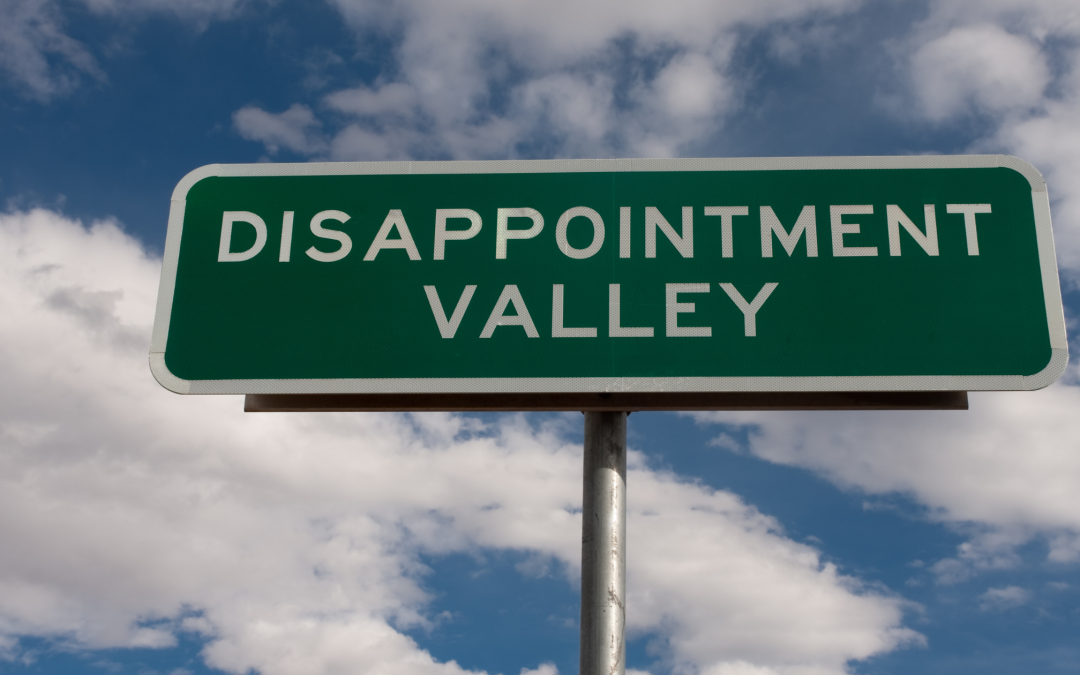
Do you know what I find a ‘bit disappointing’?
I find it a ‘bit disappointing’ you have time to worry about the manners of one individual when your husband is gleeful about the inhumane incarceration without cause of refugees, some of whom came to us as children and are still behind bars as adults.
I find it a ‘bit disappointing’ you are talking about being polite when your husband forcibly shook the hands of traumatised bushfire survivors as part of a publicity push which I think we can both agree is both impolite and shows a lack of empathy.
I find it a ‘bit disappointing’ that your husband lacks the emotional intelligence to meet with survivors of sexual violence but has the political cunning to support those within his own ranks who are potentially guilty of perpetuating it.
I find it a ‘bit disappointing’ that your husband voted against marriage equality and tried to push through damaging and discriminatory legislation adversely impacting queer Australians and reigniting the wounds of many who were abused by protected religious institutions.
I find it a ‘bit disappointing’ that your husband and his cohort hasn’t got time to ‘hold a hose’, implement the findings of the Royal Commission into aged care, order rapid antigen tests, enshrine an indigenous voice into the constitution, do something (anything FFS) about climate change, and oh so, so, so much more.
I find it a ‘bit disappointing’, but I also find it overwhelmingly offensive that a man like Scott Morrison ever became Prime Minister. I find myself incoherent with rage over the shameless hypocrisy that he flaunts on a daily basis. I am embarrassed that a man with so little humanity represents this country on a global stage.
What I didn’t find a ‘bit disappointing’ was Grace Tame. In fact, I applaud her. She is the kind of woman I want my daughters to aspire to be. I want them to be strong. I want them to have the courage to speak even when their voices’ shake. I want them to know their worth. I want them to shine like Grace Tame. Brightly, fiercely.
And lastly, I find it a ‘bit disappointing’ that as a woman supposedly trying to raise fierce daughters, you are worried about them being fierce in a polite and mannerly way.
Fuck that.
My hope for your daughters is that they are fierce. And furious. And loud with it. I hope that they are the change we want to see in the world. I hope they only respect those that earn their respect. Not a position. Not a title.
I hope that in the future, they are everything Grace Tame is today.
Yours sincerely
Me
If you want to see more of what goes on when I’m not writing on this website
follow me on Facebook, Twitter and Instagram
10 Jan 2022
I spend a lot of time thinking about stories. A lot. Some of that is because I’m a voracious reader. Some of that is because I am a content creator and so I tell a lot of stories. Some mine, some for clients, some to justify why the tooth fairy was such a stingy bastard this time round.
But mostly because stories are literally at the heart of everything. And that fascinates me.
Stories are defined by the dictionary as accounts of imaginary or real people, accounts of events, reports, plots, a particular person’s representation of the facts of a matter, information, rumours, news and more.
Countries are basically stories – they are literally imaginary lines in many cases. Imaginary lines where maybe one side speaks one language and the other a different one. Within a single country, different stories define culture, customs and dialect.
Currency is simply a story about how different people value metal and paper. Without the story there is no difference between a $50 note and wrapping paper. The story is what deems the wrapping paper to have a decorative use and the $50 a value.
Religion is made up of hundreds of different stories which overlap almost imperceptibly to some. In fact, very loosely, religions can be summarised by who you think the main character is and how important his/her story is to you.
Families are stories and often they are stories without happy endings despite our Hallmark tendency to eulogise the unit as the most important of all.
In the song Trial Before Pilate (from the Jesus Christ Superstar musical), Pilate sings to Jesus – “We all have truths, are yours the same as mine?” and I have always loved that challenge in stories, because all truths are different. As human beings we bring our own stories to every shared moment, thus imbuing it with a truth that is unique to us. Our own story, our own truth, is ours and ours alone. There is not a single other person on the planet that has the same perception of you, the same perception of the same events. Every single person you meet has a version of you that is entirely their own.
So if you meet one million people in your life time – there are one million true versions of you out there. You feature in one million stories. Sometimes you’re a lead character, and other times you are so insignificant you don’t rate a mention. Sometimes you’re in the story for a while, and other times, but a moment – but perhaps a moment of import, a moment that lingers, and shapes another story.
When we talk about brands having a story and the room rolls their eyes at what they deem your marketing wankspeak, they are contributing to the brand story. Their perceptions of a brand matter to its success. The people the brand hires become characters in the brand’s story. As businesses, we think long and hard about the people we employ because they are so critical to the story arc.
But we rarely employ the same stringent critique to our personal relationships, to the characters in our own story. It typically takes an incident, a tragedy if you will allow me to be so dramatic, before we assess how critical, how impactful they are, on our own story and the arc of the main character.
I’m fascinated by people that claim to know their partner or children better than they know themselves. It’s not possible. That is a story they tell to keep power in their own narrative irrespective of its truth. You can’t know anybody better than they know themselves, but you can tell your story more loudly, more repetitively, so that your story is the most heard. That ultimately is what history is – the retention of the stories told most loudly, by those who believe their version of events to be the most important.
Each and every one of us is a character that is fleshed out bit by bit, chapter by chapter, moulded by other characters, events and experiences. All of us impactful in small ways and big ways and good ways and bad ways. We are, at all times, both the storyteller and the story itself.
Stories are spoken. Stories are sung. Stories are written. Stories are painted. Turned into poems and movies and gardens and news reports and gossip and innuendo and inspiration and policy and the list goes on. And on.
Stories endure. That is their power.
Make yours one that you are proud to tell.
If you want to see more of what goes on when I’m not writing on this website
follow me on Facebook, Twitter and Instagram