More of them then ever
So remember that as you drop a text to your friend making plans for next weekend because you aren’t locked up in indefinite detention illegally. So remember that when you demonise people based on race or religion.
So remember that as you drop a text to your friend making plans for next weekend because you aren’t locked up in indefinite detention illegally.
Kirstin Ferguson is one of those women that look they have it all together. More irritatingly, she is probably one of those women that actually have it all together. And I loved her on sight.
Kirstin was inspired to start the project because she was sick of the way women were being treated online. She wanted to see some positive representation of women in the media. And because she is the rarest of creatures, of she went and did something about it.
Kirstin is the founder of the project “Celebrating Women” which is aiming to showcase 2 women a day every day of 2017. Over 300 women have taken part from right across the globe so far and it is a fantastic snapshot of the variety of ways that women impact on the world around them.
One of the things that got me hooked on social media quite early on is that it gives a voice to individuals and to groups of people that would not necessarily have a platform. Best of all, social media provides them with a platform that they can access with out ‘permission’ from the establishment. These groups include but are no way limited to refugee voices, indigenous voices, female voices, young voices, queer voices and non-white voices. Sure, social media also provides a platform for those that are best off left voiceless but hey – that’s democracy right?
The access to a platform for women has been both a blessing and a curse. While it gives us access to strong female voices like Clementine Ford, Van Badham, Mariam Veiszadeh, Tara Moss, Yassmin Abdel-Magied – it also gives rise to a cacophony of misandry, misogyny and men’s rights activists worried about their place in the world. While many of these interactions happen on new media, they are reported in old media and it can seem to those not actively engaged that there is just a lot of people being horrid to each other and it’s all because women don’t know their place.
But for every single ‘famous’ strong female voice, there are many others consistently doing great things in the world and impacting on their communities in ways that are small but powerful. They are creating ripples. Providing mentorship. Displaying expertise. They are being ground breaking in their own way but being visible, accountable and transparent in their approach to life. They are showcasing their successes, lamenting their failures, examining new ideas, exploring innovative solutions to old problems.
These women are the women that matter most of all in some ways as seeing somebody you know achieve something makes it so much more accessible than seeing somebody ‘famous’ do it. These women in their turn are influenced by the commentators in their space. And thanks to social media and the digital revolution they have not only access to those voices, but a platform on which to share, converse, learn and engage.
Kirstin’s #celebratingwomen project brings those new voices and inspirations together so that we can access them in one easy Facebook binge. It enables us to share examples and stories that resonate with us, with others. It allows us to see a story that will resonate with a friend or colleague, and share it. It allows us to see that women are steadily working around changing the world around them in small, diverse and inherently powerful ways because they are doing things that they love.
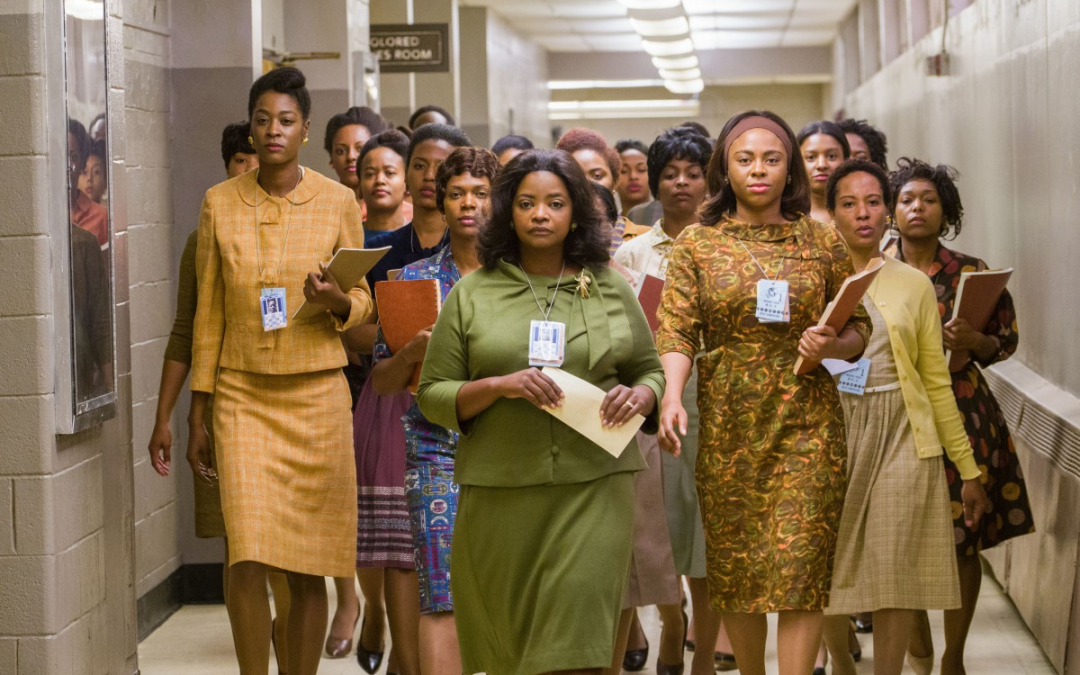
History has shown us that for every Neil Armstrong there is a Katherine Goble Johnson, a Mary Jackson, or a Dorothy Vaughan. The power of #celebratingwomen is it is not waiting for Hollywood or ‘the establishment’ to tell us the stories of those everyday women that are working hard, chipping away at prejudices, setting new standards, mentoring others, inspiring their own daughters. We have the power and ability to tell those stories now and we have the power to tell them ourselves.
And that’s worth celebrating.
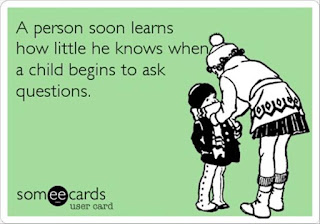
I don’t doubt that questions posed by children, and adults, are at times all of those things.
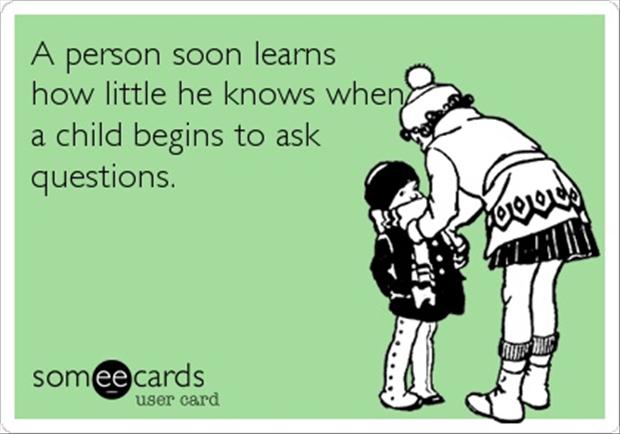
But the difference is that small people learn by asking questions. We’ve got google.
It took me a while to work out that my youngest kid was terrified of people in wheelchairs. Then a bit more to work out she wasn’t terrified of all people in wheelchairs, just some. And it took a little while longer to work out that she was only terrified of people in electric wheelchairs. It took a while longer to realise that she found them terrifying because she didn’t realise that they were people in wheelchairs because she didn’t know how they operated.
From her perspective at knee high to an adult, they were just giant, silent, machines that glided towards her like some kind of strange part human, part machine hybrid, and then passed by on their way to who knows where.
Once I’d asked a man in his electric wheelchair sitting by us in a park one day if he would show her how the wheelchair worked without him moving his arms or legs – she was fine. She understand it was a person, sitting in a chair, that worked my pressing a button. None of which was scary.
I tell this story because in my view kids aren’t arseholes just because they don’t react “correctly” to something different or ask difficult questions.
We live near a brain injury rehab. We see a lot of people in wheelchairs every single day. We have talked about how brain injuries affect people differently which is why some are in wheelchairs, some can’t speak properly, some walk strangely and so on. We thought we’d covered off the topic pretty comprehensively and we probably had. What we hadn’t realised is that the difference between somebody in a regular wheelchair and an electric one was hugely visual for a small person. She could see how one worked and that fitted into what she understood, but the other we hadn’t provided enough information and so the gap in her understanding was frightening.
We are the kind of parents that don’t sugar coat anything. If our children ask us a question we answer it no matter how hard or complicated the topic is. We make sure we give them the right information and as much as they can process. And then we wait for the next question. We work hard at making sure that they understand that people are different and that different is not bad. However, we can’t always anticipate how they will process the world because they experience it differently to us.
And they ask questions not to be rude or disrespectful but because to them, they are still in the black and white phase of life. In the same way they make statements based on facts.
Mum has a big bum.
There is no pencil which is the right shade of black for drawing my friend.
Your cooking is not as good as Chef Clair’s cooking.
Dad can’t sing.
You are being very shouty today. (Okay – yes but honestly, how hard is it just to get dressed without getting sidetracked 340049 times a minute so we’re not late for school?)
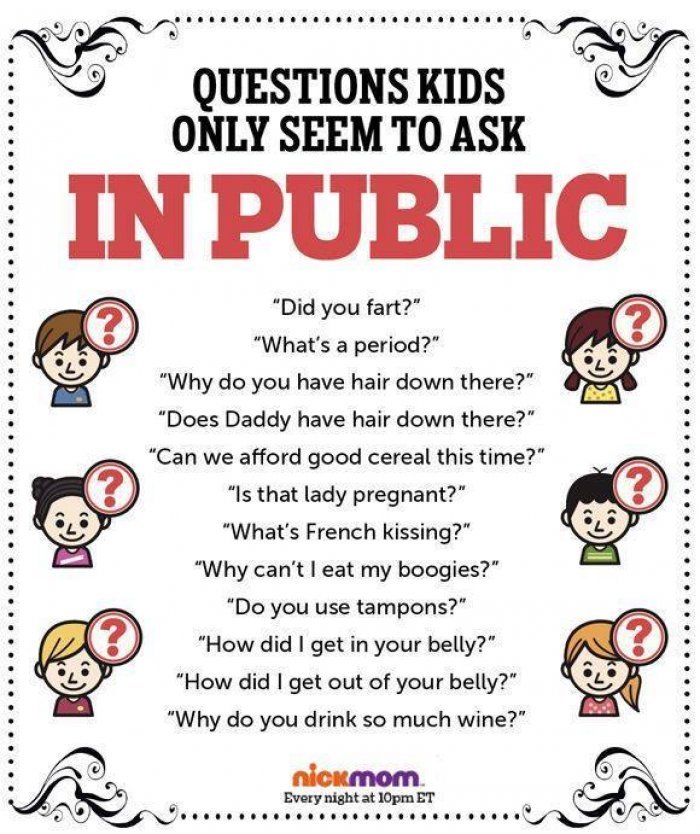
And they ask questions the same way – loudly and without a filter – and generally when you’re in a public place – particularly stuck in an elevator or close enough to the person or situation that triggered the question to hear it.
Mum if smoking is a dumb thing to do why did you used to smoke?
Why does John’s Mum eat so many sometimes foods if she doesn’t like being fat?
Why does that man only have one leg?
Why does the man in front of us smell?
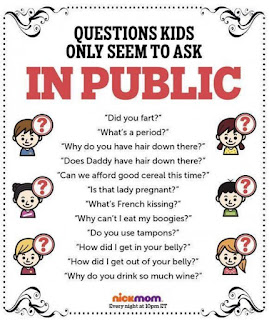
Why is that woman’s scarf a hip-hap and yours is just a scarf?
Why would you keep having children if you only get boys?
Why does willy rhyme with silly?
Why is it rude to use the word ‘fart’ in front of old people?
Why is that man homeless – doesn’t anybody like him?
When people die do they miss us?
Why does that old lady have hair coming out of her chin if she’s not a boy?
Why do I have to use a quiet voice to ask questions?
But I think we’ve got to embrace the fact that we are raising children that are confident enough to ask questions. Sure we also have to teach them empathy, kindness and consideration but we also can’t have them worrying about offending everybody when they seek to increase their understanding of the world.
I am actively trying to stop apologising to the world after a lifetime of doing it and yet, I find myself apologising to people in case offence is caused by my overly curious children who inexplicably can only ask questions at a volume which would make hardened rockers wince.
Which when I stop and think about it – could sound to my children as if I am apologising for them. And I’m not. I’m extraordinarily proud of their independence, their curiosity, their common sense and their desire to explore the world.
I watch them as they role play endlessly after seeing something different or hearing something new. I like hearing them flesh out things they need to be mindful about when playing with a partially blind friend – pointing out a step in a dark room, making sure they have a spot up front so they can see. I like seeing them explore their feelings even if it makes me squirm – “Pretend you are feeling really sad, like that time Mum got in an elevator and left me behind”. I think its a solid play habit to pretend to be different people in different situations and see how you would deal with it – “Pretend I’m a refugee and you want to help me by giving me some books but I think your books are boring.”
I accept that sometimes they are going to say or do things in those games which may need further exploration and further explanation by us, as the adults. I also accept that sometimes they say things which are so profoundly wrong on every level that we have to leave the room to laugh before we address it in our serious adult voices. But most important for me, and I think for other people to remember, is that kids don’t mean to be arsehats.
They are small humans, desperately seeking to understand the world around them through questions and play and watching the people around them.
So it’s not up to parents to stop their kids asking questions even if the questions are inappropriate. It’s up to us to work really hard NOT to be arsehats saying inappropriate things or asking inappropriate questions so they can see how that works in a world which is chaotic, and at times incomprehensible.
So my answer is basically #dontbeadick.
And your kids will probably turn out just fine.
Look, I hadn’t ever heard of Margaret Court before. I’m sure she’s great at tennis but she’s a bit shit at being a loving inclusive Christian type.
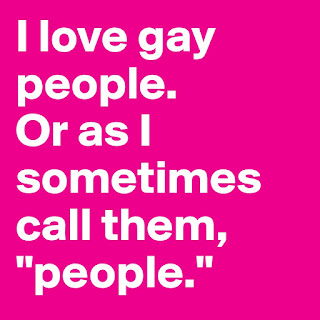
Here’s the thing about gay people.
They’re gay.
They happen to love people of the same gender.
It’s that fucking simple.
There is no grey in that.
There is no ulterior motive.
There is no big fat agenda.
There is no devil coming for our children.
They are just human beings capable of love.
Just like the rest of us.
They aren’t some kind of modern communism. Or national socialism. Or goat bonking perverts.
Here’s the other thing about gay people.
They are people.
Capable of good things and bad things. Like all people.
Because, in case you missed it…..
Gay people are just FUCKING PEOPLE.
With human rights.
THAT WE ARE IGNORING.
And I am heartily sick of us giving air time to the likes of Margaret Court and Miranda Devine and whichever posturing pretend Christian politician is trying to get his name in the paper this week.
I am heartily sick of the hurt inflicted on every single one of my gay friends – and I’ve got a DISPROPORTIONATE NUMBER OF THEM REMEMBER? – every time some slack jawed, high profile bigot of advanced years wants to inflict their lifestyle on the rest of Australia.
Okay. Deep breaths. My point?
All people in Australia should have the same human rights as all the other people.
And Margaret Court should shut the fuck up.
Whether or not you like it, your most important customer service touch-points in 2017 are your social platforms.
Quite simply, social media platforms force brands to behave well.
A simple case scenario: Buying jeans.
You go into a shop. You buy a pair of jeans. You take the jeans home. You notice they have a tear on the back you didn’t notice in-store. You return the next day, with your receipt, explain the situation and the store attendant refuses to give you your money back or exchange the jeans.
You feel this is unfair, you ask to speak to the manager. They say she’s out. You go home. You make a call, leave a message. You don’t get a response. You email the head office using the website contact form and receive a ‘we will be in touch soon’. They aren’t.
Now you’re cranky. You go to their Facebook page and write a strongly worded post explaining your dissatisfaction. All of a sudden, there is action. Somebody personally calls you, you’re apologised to, the jeans are exchanged and you’re given a discount voucher for your next pair of jeans.
The damage is done though for the brand. While they might have responded appropriately in the end – the disconnect between what they thought they could get away with and what they actually can get away with, has been exposed. The dissatisfied customer has taken the power of word of mouth, mixed it with the steroid called social media and pushed it out in the world. It’s now out of the brand’s control – the conversation is happening without them now.
Social media is not the bad guy here. It’s a poorly implemented customer service policies. I bet you any many every single brand you deal with – from the corner store to your global household names – have some kind of statement about being the good guys. If they’re big enough they might even have a mission statement, values and a commitment to customer satisfaction they stick on their walls.
But all that matters jack diddly if you don’t follow through. And good customer service should not be a surface gimmick. Your commitment to customers should start with your hiring. You should be hiring people who are the right fit for your business. Then you have your policies, your procedures, your culture, your branding and so on.
Despite the fact that we live in an increasingly digital customer environment, the majority of people don’t use a public social media posts as their first contact with a business when they have a problem. Invariably they have used more traditional avenues and more private ones. They go public when they are frustrated or they have run out of other options.
And brands need to start treating their social media platforms as genuine customer service channels. They need to be responding in a timely fashion, they need to be acting with integrity, they need to have appropriate risk management policies and a solid understanding of managing privacy without compromising connection.
They need to understand that today – nobody comes to your brand cold. Ever. They might have seen you about on the street, or heard of you via a work recommendation but by the time they meet with you they have googled everything they can. Their research will include the time to check out reviews, make a snap assessment on the appeal of your website, seen what people say about your employees, see how you respond to people on the platform, find any media releases, do some price comparisons and if this doesn’t give them what they’ve needed they’ve done a general shout out via their channels saying “Anybody done business with X – looking for feedback good and bad.”
This is a unique opportunity for brands at the moment to set themselves apart by implementing a robust customer service approach which is inclusive of their social media platforms. The digital revolution has put the power into the hands of customers. They are driving innovation. They are driving expectations. They are documenting your successes and your failures even when you are not.
So embrace it. If you believe in your brand, in your products/services, your employees and what you do – throw open the doors. Learn to love feedback that comes via your social channels. Invite it even.
But also learn to love yourselves. Back yourself. Back your brand. Do the work – align all your customer service approaches to be consistent with the customer centric approach you’ll be forced to use on social media.
And let people love you stupid for it, all over your social media platforms.
I’m all for mindfulness.
I’m all for kindness.
But I am absolutely over seeing other people apologising for things that aren’t even things.
Take Mothers’ Day.
![]() |
| Darth Vader had a mother too |
A Ms Jarvis, established spinster and massive fan of her own mother, started the campaign to answer her mother’s dream that one day the powers-that-be would create a day commemorating mothers for their service for humanity.
Eventually she got her way and because the world is as it is, it started as one thing and morphed into another when the marketing department got hold of it. Somebody at Hallmark probably got a bonus. And now a century later we commemorate our mothers for their service to humanity by buying joke cards, dressing gowns and wine.
Now here’s the thing. I get that not everybody has a mother in their lives due to death or other reasons. I get that not everybody has a mother they like. I get that not everybody is a mother, or can be a mother, or wants to be a mother. And I get that some have two mothers or some step-mothers, or a grandmother acting as a mother, or a father who is doing the mothering which seems like fathering which is just parenting but hey, I digress.
No. Not everybody is going to be loving the day. Or needs the day. Or wants the day. Okay. Got it.
But that doesn’t mean we can’t say on our social medias, or in a card, or on the television “Happy Mother’s Day” without adding a caveat inclusive of all the above. We do not need to apologise for enjoying the shamelessly commercial nature of a day dedicated to this particular role in life – if we choose to do so.
It’s not a competition people. Just enjoy the day or not. Stop making it a battlefield.
We don’t apply the same hysteria to the whole buy-a-diamond-worth-three-months-salary-thing which is nothing but another successful marketing campaign designed to turn the historically commercial transaction of marriage into a way of making money out of the modern notion of ‘a love match’.
When somebody gets engaged, we don’t say “Happy Engagement” and then add a caveat to acknowledge all the people that didn’t choose a diamond, aren’t married, are formerly married, want to get married but aren’t, no long want to be married, and so on and so forth.
We don’t shout down the people congratulating the happy couple by calling them out publicly for their insensitivity to the unlucky in love or the recently separated or berating them for forgetting that you want to get married but can’t find anybody to marry you.
On the most part we think “how lovely for them” and then forget about it.
Absolutely – if you know somebody personally that’s having a rough time around Mothers’ Day, or their ex-husband’s engagement or whatever – reach out to them personally, but don’t patronise them by acknowledging them one day a year and then say or do nothing about it for the rest of the year.
If you truly give a shit you should know that that loss or absence in their lives is a constant. It needs support and encouragement all year around, not some token “I see you barren lady” post alongside the pictures of you in your new car.
Be kind, be thoughtful, be inclusive, be mindful – but give over making it ‘a thing’.
The celebration of one thing is not a dismissal of another. You can care deeply about one thing and still indulge in fun. It’s one of the key elements of being human.
Chaotically, imperfectly, unchangeably human.
(And one last thing – don’t forget to hunt out sea monkeys, trees, lovers of Coquilles Saint Jacques, Biographers, LGBTI Elders, and people who draw and wish them a good day today. Because today is their day. And I am in no way offended if you don’t include a caveat that acknowledges my absence from that particular set of descriptors.)
Happy Tuesday.